
Men’s hair loss treatment that starts with your DNA.
Most clinics hand every man the same pill. We diagnose the real cause of your hair loss with genetic testing and AI scalp imaging — then build a plan that’s actually yours. Whether the answer is medical, surgical, or both.
We don’t guess. We test.
Not every man responds to finasteride — some don’t even have an elevated form of the 5-alpha-reductase enzyme it targets. That’s why we start with diagnosis, not a prescription.
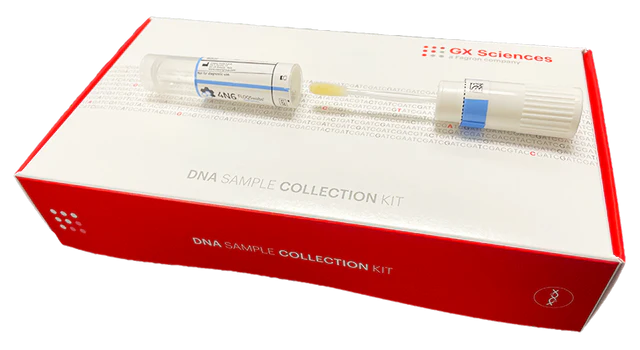
Your DNA, Decoded
A simple cheek-swab genetic test reveals which medications and ingredients your body is most likely to respond to — and which to avoid — across the DHT and antiandrogen pathway, growth support, and the exact vitamin and mineral needs behind your hair loss. Your plan is matched to your biology, not guesswork.

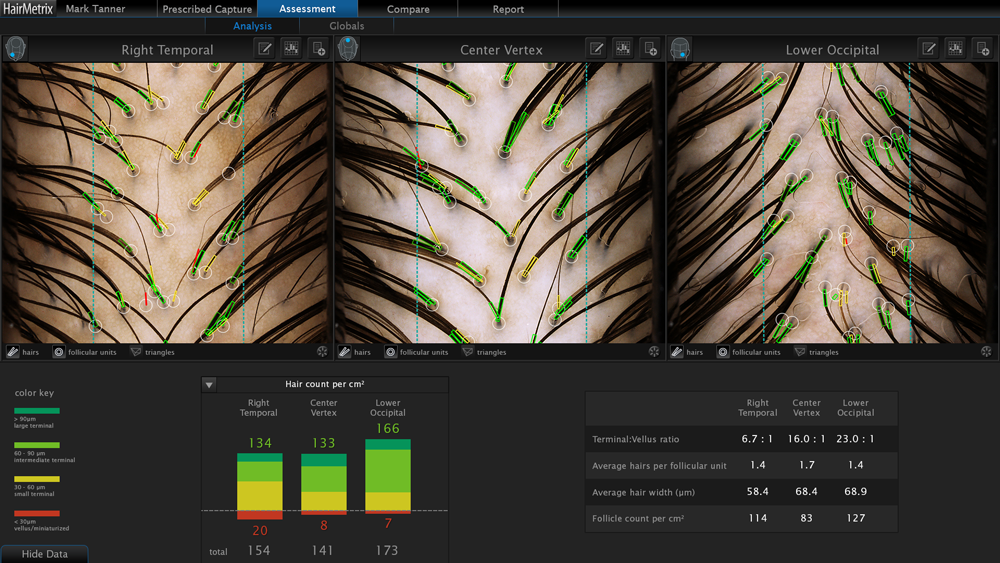
HairMetrix® Scalp Analysis
Canfield’s AI-driven HairMetrix captures microscopic scalp images at every visit — no clipping, no waiting, results in real time. It measures hair count per cm², follicle diameter, terminal-to-vellus ratio, and growth phase — so we can spot miniaturized follicles that are still alive and track your progress objectively over time.
Stop the loss. Then restore.
We treat hair loss before transplanting — so you don’t get a crown filled in at 30 only to lose more hair around it over the next ten years.
Stop the Loss
Genetic-guided medical management to halt progression and revive miniaturized follicles — before they go dormant. For many men, this alone is the answer.
Restore What’s Needed
If follicles have already gone dormant, a WAW FUE transplant — planned alongside your medical plan so results last and stay natural for decades, not just this year.
What men get wrong about going bald.
Not really. Hair-loss genetics are complicated and can’t be pinned to one side of the family. Plenty of men have mothers, fathers, and grandfathers with full heads of hair — and still lose theirs.
No. Hats and shampoo don’t cause male hair loss. The real drivers are DHT sensitivity, how efficiently your body converts testosterone to DHT, hormones, and inflammation — things happening inside the follicle.
Often false. Before a follicle dies it miniaturizes — and a miniaturized follicle is not a dead one. With the right treatment, miniaturized follicles can be revived before they go dormant.
More than a pill. A full toolkit.
Once we know what’s driving your hair loss, we build your plan from a complete range of options — non-surgical to surgical, matched to your genetics.
- Genetic-Matched Medical ManagementOral and topical prescriptions chosen for how your body responds — not the same drug handed to every man.
- PDGF Growth-Factor TreatmentsPlatelet-derived growth-factor therapy applied to the scalp to support the follicle environment.
- Clinical Low-Level Laser TherapyA dedicated in-clinic laser room to help calm inflammation, support the follicle, and encourage growth.
- Nutritional ProtocolsTargeted vitamin and mineral support for the specific deficiencies your genetic test flags.
- At-Home RegimensTake-home laser devices and prescription routines so progress continues between visits.
- WAW FUE Hair TransplantWhen follicles are already gone, a precision FUE transplant — planned alongside your medical plan.
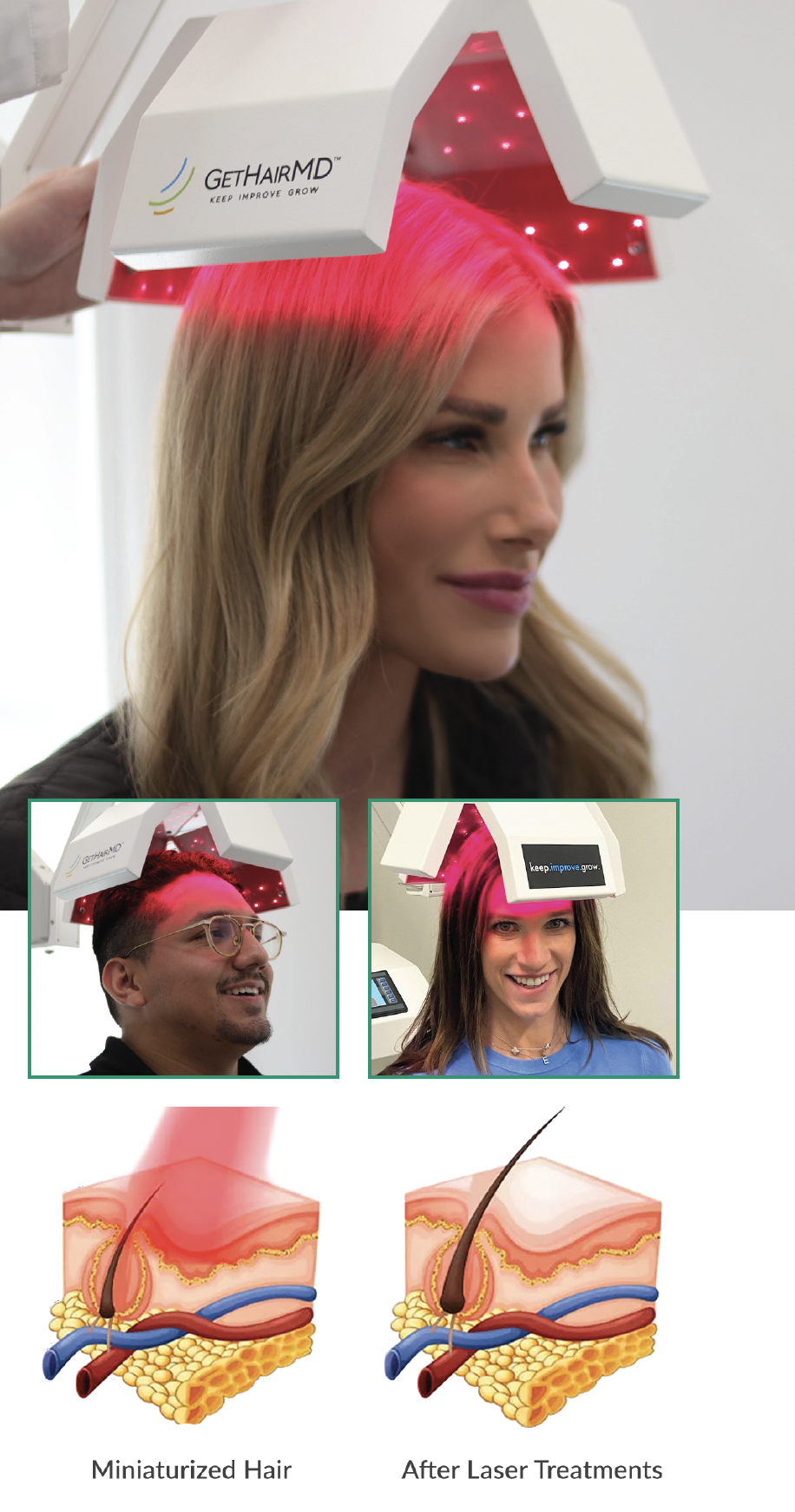
Three tiers. One goal. Your hair back.
Hair loss doesn’t have one cause — so it shouldn’t have one treatment. Our GetHairMD™ programs hit it from every angle: genetics, medical management, clinical laser therapy, growth-factor treatments, nutritional support, and ongoing provider oversight all year.
Amplify Anywhere™
Our home-based program. Genetic testing, customized medical management, a prescribed Nutrafol regimen, at-home protocols, and regular follow-ups with plan adjustments as your results develop.
Intensive Impact™
In-clinic and at-home care for moderate-to-significant thinning. Everything in Amplify Anywhere, plus clinical-grade low-level laser therapy, PDGF growth-factor treatments, in-clinic sessions, HairMetrix tracking, and ongoing provider management.
Elite Elevation™
Our most comprehensive program for significant or accelerating loss. Everything in the first two tiers, plus double-dose PDGF treatments, comprehensive bloodwork, the highest-frequency in-clinic scheduling, and priority provider access.
Real regrowth from our non-surgical programs.
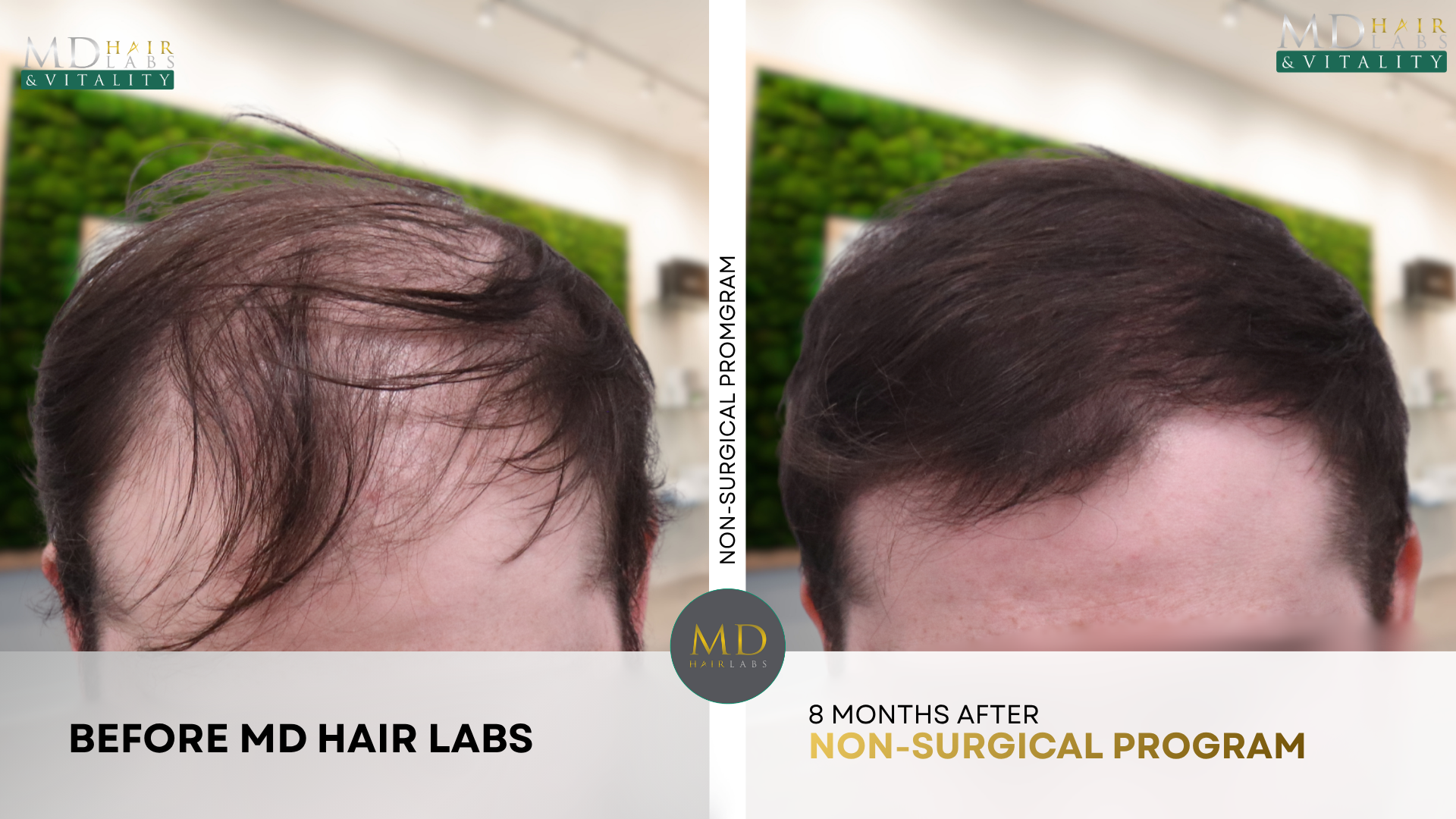
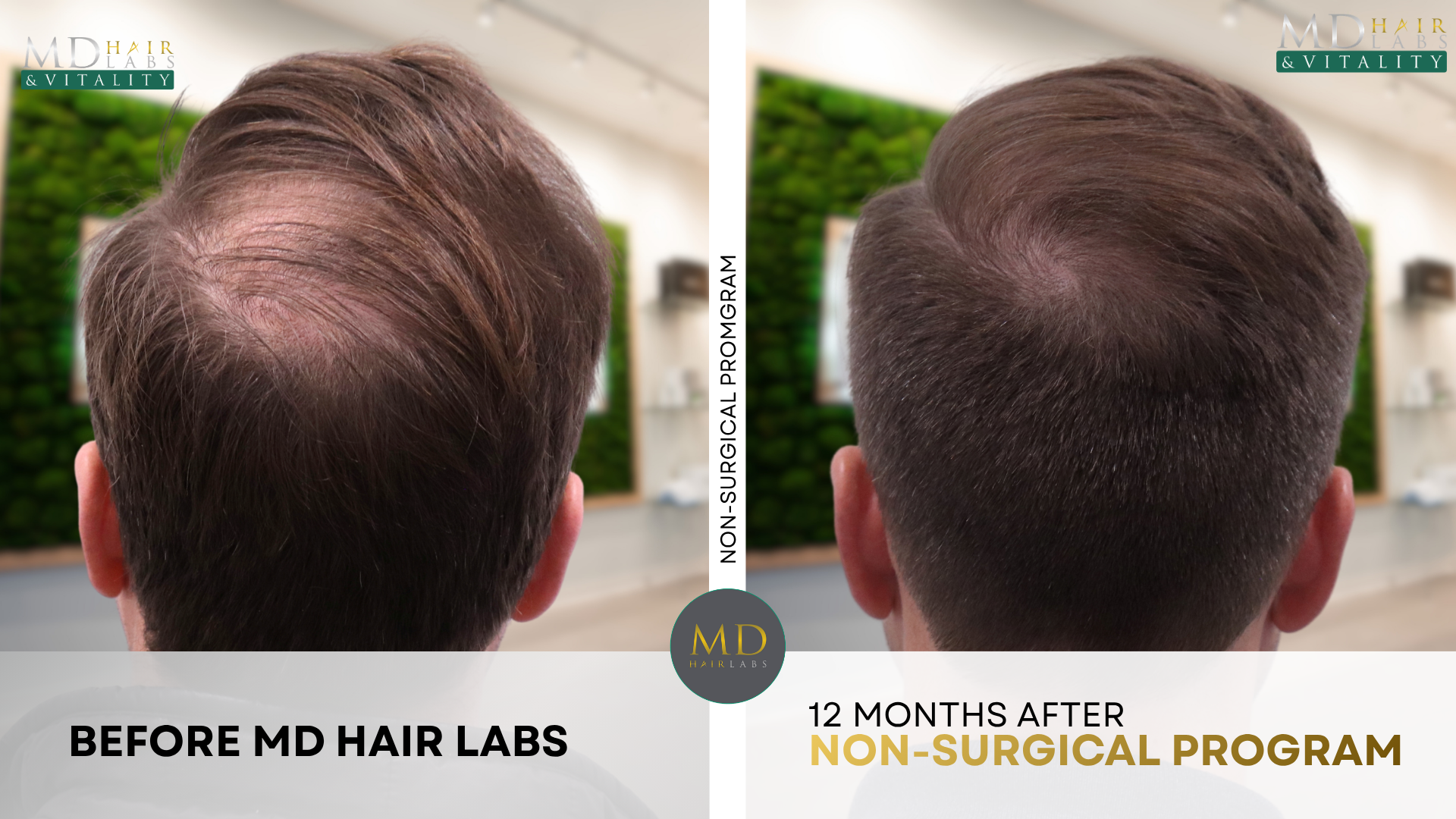
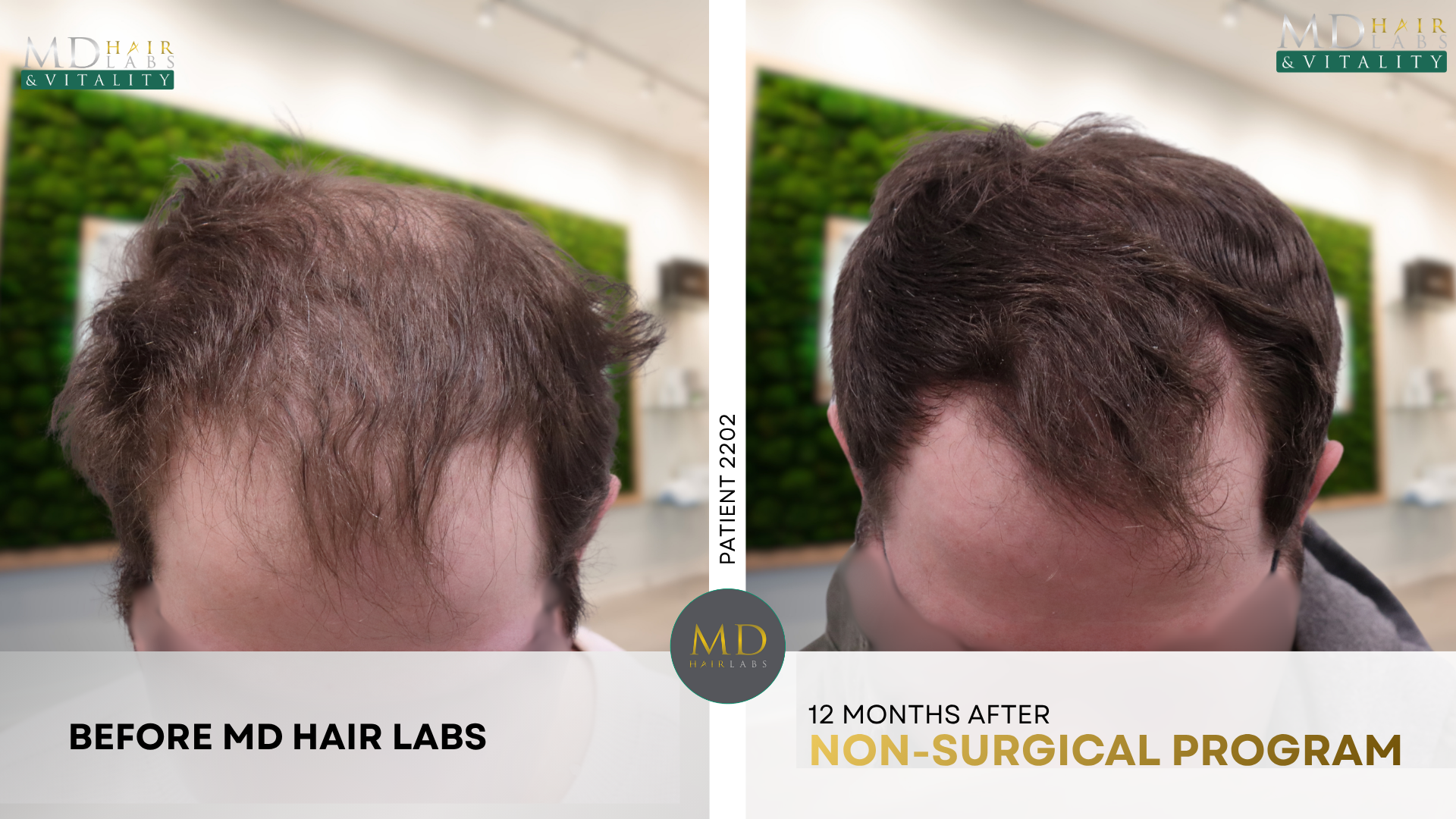
Patients of MD Hair Labs — individual results vary.
Every program begins with a consultation, so we can match the right tier to your hair loss.
What to expect, step by step.
Your First Visit — about 45 minutes
Check in, meet your team, and get HairMetrix scalp imaging. We review your history, show you what’s really happening on the big screen, and map every option — no pressure, no sales.
Genetic Test
A quick genetic test — often the same day — reveals the plan that fits your biology. Results come back in about three weeks.
Your Personalized Plan
A second consult to review your results and begin treatment: prescriptions, supplements, laser, PDGF, or a transplant plan built around you.
3-Month Follow-Up
New HairMetrix imaging to confirm you’re responding, check for inflammation, and fine-tune the plan.
6–12 Months
The turnaround. Most men see meaningful, visible change around six months, with fuller results through twelve. Individual results vary.
All we do is hair.
Not a med-spa or a plastics office that does transplants on the side. Hair restoration — surgical and non-surgical — every single day, for years. A consistent, specialized team that treats you as a patient, not a number — the opposite of the scale-and-sell chains.
The Most Advanced Technology
Genetic testing, HairMetrix AI imaging, clinical laser therapy, and WAW FUE — the best surgical and non-surgical tools in the field, used at every step.
One Consistent, Specialized Team
The same specialized team performs every procedure, each trained in-house for a specific role — unlike chains that rotate different technicians across locations. Consistency is how we protect your result.
Patient-First, Not Sales-First
We’ll steer you away from a transplant you don’t need. Our job is to educate you and help you choose what’s right — we educate, we don’t sell.
In Our Own Words
“MD Hair Labs treats hair loss before transplanting — so you don't get a crown filled in at 30 only to lose more hair around it over the next ten years.”
— MD Hair Labs
“Not every man responds to finasteride — some don't even have an elevated form of the 5-alpha-reductase enzyme that finasteride targets, which is why genetic testing comes before any prescription.”
— MD Hair Labs
“A miniaturized hair follicle is not a dead follicle — with the right treatment, miniaturized follicles can be revived before they go dormant.”
— MD Hair Labs
“The same specialized surgical team performs every transplant, each trained in-house for a specific role — unlike chains that rotate different technicians across locations.”
— MD Hair Labs
Men's hair loss, answered.
What actually causes male hair loss?
Is hair loss inherited from my mother's side?
Do hats or shampoo cause hair loss?
If I can already see my scalp, is it too late?
What is the genetic hair-loss test, and why do it?
Do I need a hair transplant, or can I treat it without surgery?
How soon will I see results?
Do you treat men who travel or fly in?
How much does men's hair loss treatment cost?
Where is MD Hair Labs located?
Find out what’s actually causing your hair loss.
Book a consultation with the team that diagnoses first and treats you like a patient, not a sale. Local or fly-in — we’ll build the plan that’s right for you.